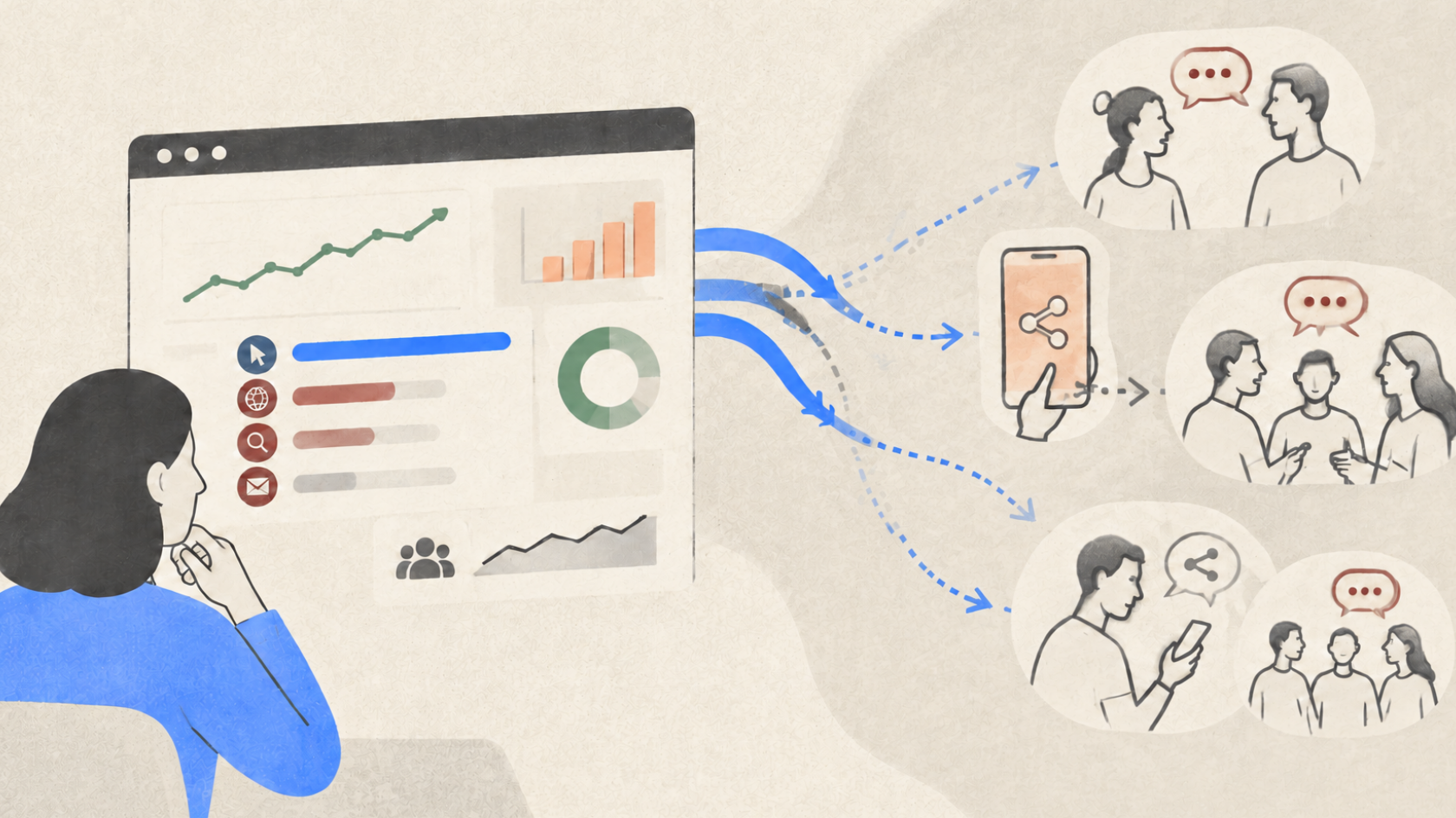
The Creative Sameness Problem: Why Your Ads Need a Point of View
Why sameness makes advertising forgettable, and how to build a distinctive creative idea that earns attention and results.
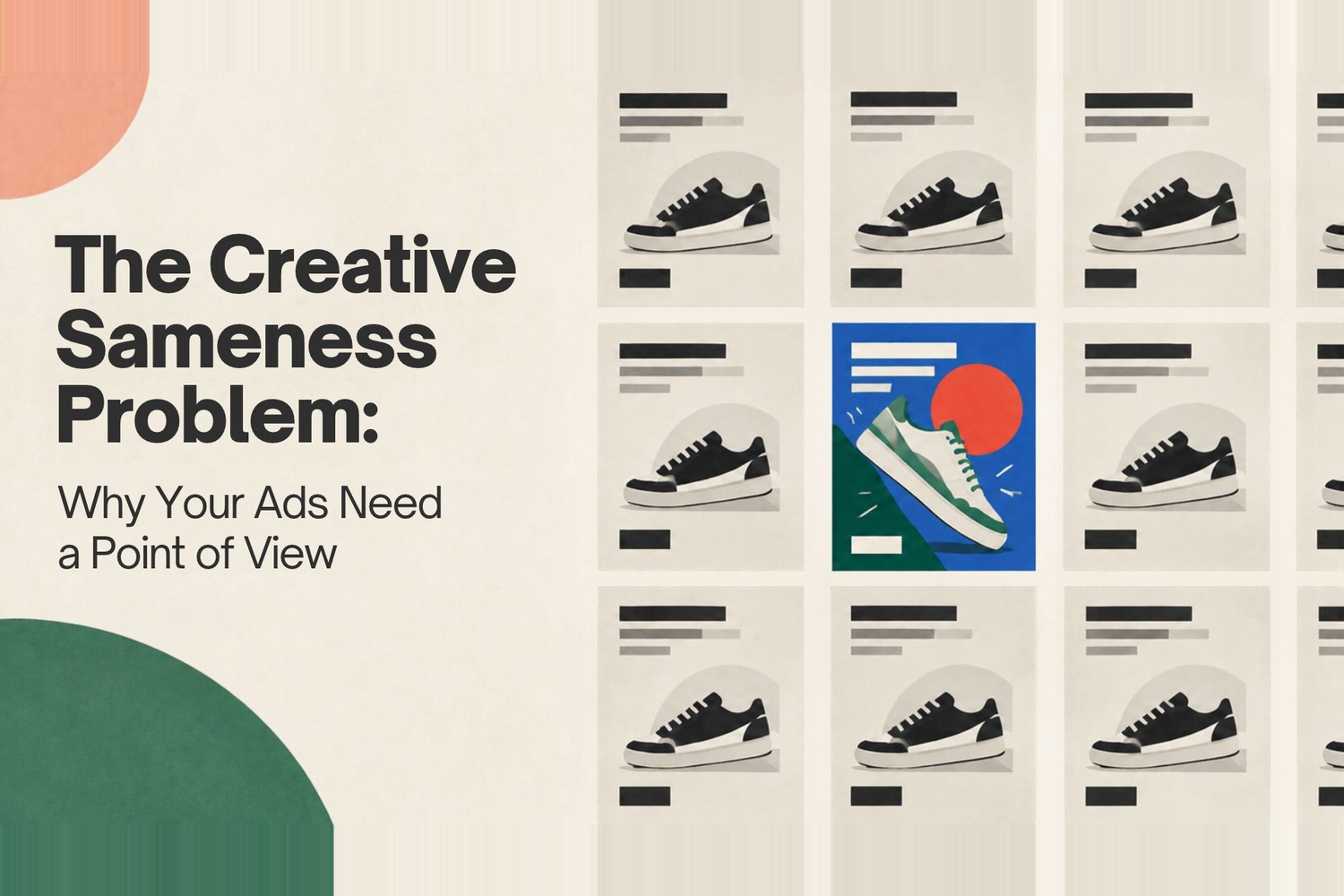
Open five advertisements from competing businesses in almost any category. How many could swap logos without changing the story? The same neutral background, the same product floating in space, the same list of benefits and the same call to action. Performance platforms have made it easier to produce and distribute creative at speed. They have not made it easier for a brand to be remembered.
We call this the creative sameness problem. When businesses treat advertising as a collection of interchangeable assets, they may gain operational efficiency while losing the thing that makes their messages recognisable. The solution is not to be strange for the sake of it. It is to develop a distinctive idea that actually belongs to the brand.
The evidence for creativity is stronger than the case for endless variation
In a January 2026 analysis, creative effectiveness specialist System1 reported a confidence gap among marketers, alongside an examination of 1,265 campaigns across several markets. Its analysis found that marketers with lower confidence were 49% more likely to rely on short-term results. The research is useful context, though it is not a controlled experiment proving that one particular creative format will outperform another.
Short-term measurement is appealing because it produces quick numbers. But an ad can acquire clicks without building a recognisable brand, and a distinctive brand idea can influence decisions beyond the immediate reporting window. The danger is optimising every asset only for the metric easiest to see.
Distinctive does not mean decorative
The UK's Institute of Practitioners in Advertising has examined how creative consistency contributes to marketing effectiveness. Research discussed by the IPA and System1 considers the value of recurring brand assets, characters, emotional storytelling and recognisable executions. The point is not that every business needs a mascot, celebrity or elaborate production. It is that distinctive cues help audiences connect a message to its source.
Imagine a small architecture practice whose ads all feature anonymous photographs of attractive buildings. The images look professional, but a competitor could use the same approach tomorrow. A more ownable idea might be to show the decisions behind a space: how sunlight moves through a room, why a material was chosen, how a workplace became easier to use. That is a hypothetical creative route, not a claim about an existing client. It gives the business a perspective that can be developed into a consistent series.
Start with a tension worth talking about
A productive creative brief begins with the audience's problem and the contradiction inside it. A founder wants growth but fears losing control. A buyer wants premium quality but cannot tolerate uncertainty. An operations manager needs efficiency without disrupting a team. Those tensions can produce stronger ideas than a list of product features.
Write down three things before generating an asset: the customer tension, the single proposition and the proof. Then ask what visual, character, narrative or recurring device could communicate the idea in a way that is recognisably yours. If the execution works equally well for every competitor, it is not distinctive enough.
Use AI for exploration, not as a substitute for judgement
Generative tools can help visualise unusual compositions, vary copy structures, explore storyboards and reduce production time. They can also make sameness cheaper and faster. If ten brands give a tool similar prompts, there is little strategic reason to expect the outputs to create ten different identities.
Human creative direction still matters: which audience truth is worth expressing, which idea deserves commitment, where brand cues should appear and whether the execution is believable. AI can assist with execution, but it cannot tell a business what it ought to stand for without a strong brief.
Test the idea and the execution separately
Useful creative testing is not limited to whether version A gets a lower cost per click than version B. Ask whether people correctly recognise the brand, remember its distinctive cues, understand the proposition and find the message relevant. For conversion-focused campaigns, review qualified leads, customer acquisition costs and what happens after the click. For brand-building work, use consistent tracking of awareness, consideration and recognition where the budget allows.
System1's 2026 discussion of creative research makes an important point: an execution that stands out in one category may be entirely conventional in another, and being different is not automatically effective. Research helps diagnose what audiences notice and remember; it should inform, not replace, creative judgement.
Give a promising idea enough time to become recognisable
Another common mistake is abandoning a creative platform after a few weeks because it has not immediately produced extraordinary returns. Keep testing messages, formats and placements, but consider what should remain consistent: the underlying thought, tone, colours, visual language and distinctive brand cues. Repetition can build familiarity when the idea deserves repeating.
For a business with a modest budget, a coherent creative system can be more realistic than inventing a new campaign from scratch every month. It gives paid media, social, website content and email a shared direction without making every piece identical.
The important question for marketers is not 'How many creatives can we generate this week?' It is 'Would anyone know these were ours without seeing the logo?' If the answer is no, volume may be hiding a strategy problem. Explore how Verve & Metric approaches positioning, creative and growth if your next campaign needs a more ownable point of view.